Quick Facts
- The Gold Standard: Use baking powder at a 3:1 ratio—three teaspoons for every one teaspoon of soda.
- Low Sodium Choice: Potassium bicarbonate provides a direct 1:1 ratio swap without the salt.
- Best for Crunch: Use baker’s ammonia at a 1:1 ratio for ultra-thin, crispy cookies.
- The Mnemonic: Remember "Soda = Spread, Powder = Puff" to manage your final texture.
- Sodium Content: Just one teaspoon of baking soda contains 1,260mg of sodium.
- The Direct Answer: The most common baking soda substitute is baking powder, which requires a 3:1 ratio—three teaspoons of baking powder for every one teaspoon of baking soda. For a low-sodium 1:1 alternative, use potassium bicarbonate.
It happens to the best of us: you are halfway through a batch of chocolate chip cookies only to realize the orange box in the pantry is empty. While baking soda is a powerful leavener, you do not have to abandon your recipe. The most common baking soda substitute is baking powder, which requires a 3:1 ratio—three teaspoons of baking powder for every one teaspoon of baking soda. Other effective alternatives include potassium bicarbonate used in a 1:1 ratio, self-rising flour as a base replacement, or whipped egg whites to provide natural aeration and lift.
Why Baking Soda is Unique: The Chemistry of Lift
To understand why baking soda substitutes require specific adjustments, we have to look at the science of the crumb structure. Baking soda, or Sodium bicarbonate, is a base with an alkalinity of about pH 8. In the world of chemical leavening agent reactions, a base needs an acid to create life. When you mix baking soda with an acidic ingredient like buttermilk, lemon juice, or yogurt, an acid-base reaction occurs immediately. This reaction produces carbon dioxide bubbles that expand in the heat of the oven, causing your dough to rise.
Beyond just the lift, baking soda plays a critical role in the Maillard reaction. This is the chemical process responsible for the deep browning and complex flavors in baked goods. Because baking soda increases the pH of the dough, it accelerates browning. This is why recipes with soda often result in a darker, crispier exterior compared to those using only powder. Without the proper alkalinity, your cookies might come out pale and soft rather than golden and crunchy.
| Substitute | Ratio | Best For | Note |
|---|---|---|---|
| Baking Powder | 3:1 | Most recipes | Reduce added salt |
| Potassium Bicarbonate | 1:1 | Heart-healthy baking | Low sodium option |
| Self-Rising Flour | Variable | Biscuits, pancakes | Replaces flour + soda |
| Baker's Ammonia | 1:1 | Thin, dry cookies | Not for moist cakes |
| Whipped Egg Whites | 2 whites per tsp | Fluffy cakes | Mechanical leavening |
1. Baking Powder: The 3:1 Ratio Standard
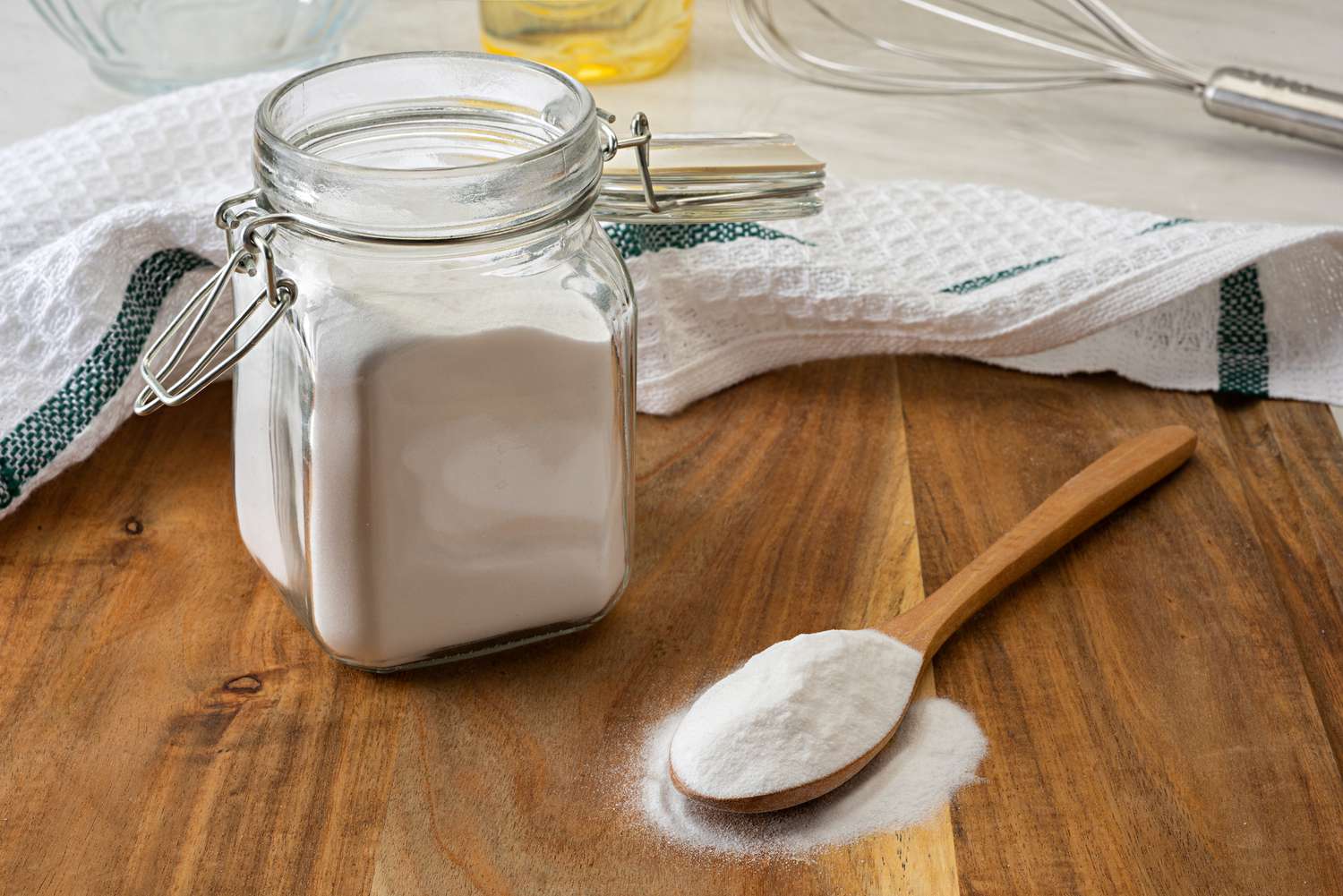
When looking for baking soda substitutes, baking powder is usually the first thing bakers reach for. However, they are not interchangeable in equal amounts. Baking powder is actually a mixture of baking soda and a dry acid, usually cream of tartar. Because it is already "diluted" with acid and cornstarch, it is significantly less potent than pure soda.
When substituting baking powder for baking soda in a recipe, the standard conversion ratio is 3:1, requiring three teaspoons of baking powder for every one teaspoon of baking soda to achieve equivalent leavening. This ensures you have enough Sodium bicarbonate to get the job done.
Pro-Tip: Because baking powder contains its own acid, the buttermilk activation in your original recipe might be overkill. You can often swap the buttermilk for regular milk to prevent the batter from becoming too acidic. Additionally, baking powder contains a fair amount of salt; to keep the flavor balanced, reduce the added salt in your recipe by half.
2. Potassium Bicarbonate: The Healthy 1:1 Swap
If you are monitoring your blood pressure or looking for a heart-healthy alternative, potassium bicarbonate is an exceptional choice. A survey conducted by the International Food Information Council found that 70% of consumers are more likely to purchase products labeled as natural or health-conscious, which has helped drive the popularity of specialty leaveners.
Potassium bicarbonate acts as an effective 1:1 substitute for baking soda and is specifically recommended for low-sodium diets as it eliminates the sodium content from leavening. Since it mimics the chemical behavior of Sodium bicarbonate exactly, you don't have to worry about changing the crumb structure or the volume of the finished product.
The only catch is flavor. Baking soda provides a subtle saltiness that we often associate with traditional baked goods. When using potassium bicarbonate substitute as a replacement, you may notice the taste is slightly flat. If you aren't strictly avoiding salt for medical reasons, adding an extra 1/4 teaspoon of salt to the batter can help restore that familiar flavor profile.
3. Self-Rising Flour: The All-in-One Alternative
Sometimes the best way to handle a missing ingredient is to change the base of the recipe. Using self rising flour as a baking soda substitute is a smart move for biscuits, scones, and pancakes. Self-rising flour is a pre-mixed combination of all-purpose flour, baking powder, and salt.
Generally, every cup of self-rising flour contains about 1.5 teaspoons of baking powder and 1/4 teaspoon of salt. To use this as a replacement, you must swap out the all-purpose flour called for in your recipe entirely. This requires a bit of kitchen math. If your recipe calls for 1 teaspoon of baking soda and 2 cups of flour, you would use 2 cups of self-rising flour. However, since 2 cups of self-rising flour only provide the equivalent of 3 teaspoons of baking powder (which equals 1 teaspoon of soda), it is a perfect match.
The result is usually a very consistent crumb structure, though the texture may be slightly more "cake-like" than recipes using pure soda, as self-rising flour is formulated for a gentle lift rather than a wide spread.
4. Baker’s Ammonia: For the Ultimate Crunch
Long before modern baking powder existed, bakers relied on ammonium carbonate, also known as baker's ammonia. While it is less common in modern home kitchens, it remains a fantastic baking soda replacement ratio for cookies that need to be exceptionally crisp.
The baker's ammonia ratio for crispy cookies is a simple 1:1 swap. It is the secret weapon for traditional European recipes like Springerle or Speculoos. Because it breaks down completely into carbon dioxide and ammonia gas during baking, it leaves no residual taste—provided the cookie is thin and dry.
However, a word of caution: do not use this in moist cakes or thick brownies. If the moisture level is too high, the ammonia gas cannot escape, and your cake will end up smelling and tasting like window cleaner. For crackers and biscotti, though, it provides an alkalinity and pH balance that is hard to beat.
5. Mechanical Leavening: Whipped Egg Whites
If you find yourself without any chemical leavening agents at all, you can turn to the power of physics. Whipping egg whites creates millions of tiny air pockets, providing mechanical aeration that can mimic the lift of carbon dioxide bubbles.
For most recipes, you can substitute 2 whipped egg whites for every 1 teaspoon of baking soda. This is particularly effective when considering baking soda vs baking powder for pancakes or waffles. You should separate the eggs in your recipe, whip the whites to stiff peaks, and gently fold them into the batter at the very end.
While this method won't provide the same Maillard reaction browning as soda, it will give your baked goods a beautiful, airy "puff." It is an elegant solution for sponge cakes and light muffins where a delicate texture is more important than a dense, chewy spread.
When Not to Substitute: Avoiding Kitchen Failures
While I love a good kitchen hack, there are times when substitutes just won't cut it. The most notorious example is the classic American chocolate chip cookie. The unique appeal of these cookies—the chewy center, the crisp edges, and the deep caramel color—relies heavily on the high pH of baking soda.
If you use a baking powder vs baking soda approach in cookies without adjusting for the acidity, the cookies will likely stay pale, puff up like little cakes, and lack that signature "chew." What happens if you forget baking soda in cookies? You end up with a dense, flat, and somewhat flavorless puck. If you are a perfectionist about your cookie texture, it might be worth a quick trip to the grocery store rather than risking a sub-par batch.
How to Test if Your Leaveners are Still Active
Before you commit to a substitution, make sure your backup ingredients are actually still good. Even the best baking soda substitutes will fail if they have passed their shelf life expiration. Chemical leaveners are sensitive to humidity and time, and they can lose their potency long before the date on the box.
You can perform a simple "Fizz Test" to verify their strength:
- To test Baking Soda: Place a half-teaspoon in a bowl and add a splash of vinegar. It should bubble vigorously and immediately.
- To test Baking Powder: Place a half-teaspoon in a bowl and add a splash of hot tap water. Because powder contains its own acid, it only needs heat and moisture to react.
If the reaction is weak or non-existent, your pH balance in the recipe will be off, and your bake will likely fail. Always keep your leaveners in a cool, dry place to ensure they are ready when inspiration strikes.
FAQ
What can I use if I don't have baking soda?
The most reliable alternative is baking powder used in a 3:1 ratio. If you are looking for a more direct 1:1 replacement, potassium bicarbonate is the best chemical match. In a pinch, for lighter items like pancakes, you can also use whipped egg whites to provide mechanical lift.
Can I use baking powder as a substitute for baking soda?
Yes, but you cannot use it in the same amount. Baking powder is weaker than baking soda and contains added acidic ingredients. To get the same rising power, you must increase the quantity and make small adjustments to the salt and acidic liquids in your recipe.
How much baking powder replaces one teaspoon of baking soda?
The correct baking soda replacement ratio is 3:1. You will need three teaspoons of baking powder to replace one teaspoon of baking soda. If your recipe calls for a large amount of soda, this may mean using quite a bit of powder, so be sure to reduce the salt in the recipe to compensate for the salt found in the baking powder.
What happens if you leave baking soda out of a recipe?
If you omit baking soda without using a substitute, your baked goods will be dense, flat, and pale. Because baking soda is responsible for both carbon dioxide production and enhancing the browning process, the final product will lack both the volume and the rich flavor associated with the Maillard reaction.
Can I use cream of tartar instead of baking soda?
No, cream of tartar is an acid, while baking soda is a base. They perform opposite functions in a recipe. However, if you have baking soda and are missing baking powder, you can combine cream of tartar with baking soda to create your own homemade baking powder.
Is self-rising flour a good alternative to baking soda?
Self-rising flour is an excellent alternative for recipes where you can replace the entire flour base, such as in biscuits or quick breads. Since it already contains baking powder and salt, it provides a built-in leavening system. Just ensure the ratios of leavener in the flour match the needs of your specific recipe.