Quick Facts
- Primary Target: Glutes, Hamstrings, Adductor Magnus, and Spinal Erectors.
- Key Benefit: Breaks the stretch-shortening cycle to build explosive starting strength from a static position.
- Safety Advantage: Vertical shin alignment significantly reduces patellar tendon pressure and knee shear.
- Performance Stat: Research shows box squats can produce a rate of force development three to four times greater than traditional squats.
- Execution Goal: Sit back, not down, to shift the center of mass and maximize posterior chain engagement.
- Consistency: The box provides a tactile depth gauge, ensuring every rep meets specific training standards.
Box squats primarily target the posterior chain, including the glutes, hamstrings, and lower back, by allowing the lifter to sit further back than a traditional squat. This movement breaks the stretch-shortening cycle, forcing the muscles to generate force from a static position, which builds explosive power and absolute strength. Additionally, box squats improve squat depth consistency and reduce knee strain by maintaining vertical shins.
The Science of the Posterior Chain: Why Box Squat?
In the world of high-level strength training, few movements are as misunderstood—or as effective—as box squats. While many casual gym-goers view the box as a mere safety net or a depth check, elite powerlifters and athletes use it as a tool to manipulate physics. The primary reason box squats are so effective for posterior chain muscle development lies in the static-dynamic method. This method, popularized by Westside Barbell and the legendary Louie Simmons, involves a transition from a static state to a dynamic one.
When you perform a regular squat, your muscles utilize the stretch reflex, a biological "rebound" effect where the eccentric (lowering) phase stores elastic energy that helps you "bounce" out of the hole. Box squats eliminate this advantage. By coming to a complete stop on the box, that stored energy dissipates. You are forced to recruit more motor units to overcome inertia from a dead stop. This specific eccentric-concentric transition is what builds massive reversal strength.
When evaluating box squats vs back squats for posterior chain recruitment, the geometry of the lift changes the game. In a traditional squat, the knees often travel forward, increasing quad demand. In box squats, the box allows you to push the hips much further back. This creates a longer lever arm for the gluteus maximus and hamstrings, forcing them to do the heavy lifting. Biomechanical studies have validated this increase in force production. For example, research comparing the two exercises found that at 70% of a one-repetition maximum (1RM), box squats generated a higher peak force of 3,364 ± 575 N compared to 3,269 ± 573 N for traditional back squats.
Furthermore, the ability to generate power is significantly enhanced. At 80% of 1RM, box squats have been shown to produce a significantly higher peak power output of 2,197 ± 544 W compared to 2,050 ± 486 W for regular squats. These figures aren't just academic; they represent the difference between a stalled personal record and a successful lift.
Mastering Proper Box Squat Technique
Executing the proper box squat technique requires a fundamental shift in how you perceive the squatting motion. For most, the squat is a "down and up" movement. For the box squat, it is a "back and up" movement. This distinction is what protects the joints and builds the glutes.
The Setup and Stance
Begin with a wider stance than your traditional squat. A wide stance further engages the hips and adductors while making it easier to maintain vertical shins. The bar should be positioned firmly across your upper traps or rear deltoids, depending on your preference for high-bar or low-bar positioning. However, for maximal posterior chain engagement, a low-bar position is often preferred in powerlifting circles.
Tighten your core by drawing a deep breath into your abdomen—not your chest—and bracing as if someone is about to punch you. This intra-abdominal pressure is vital for protecting the spine during the pause on the box.
The Descent: Sitting Back
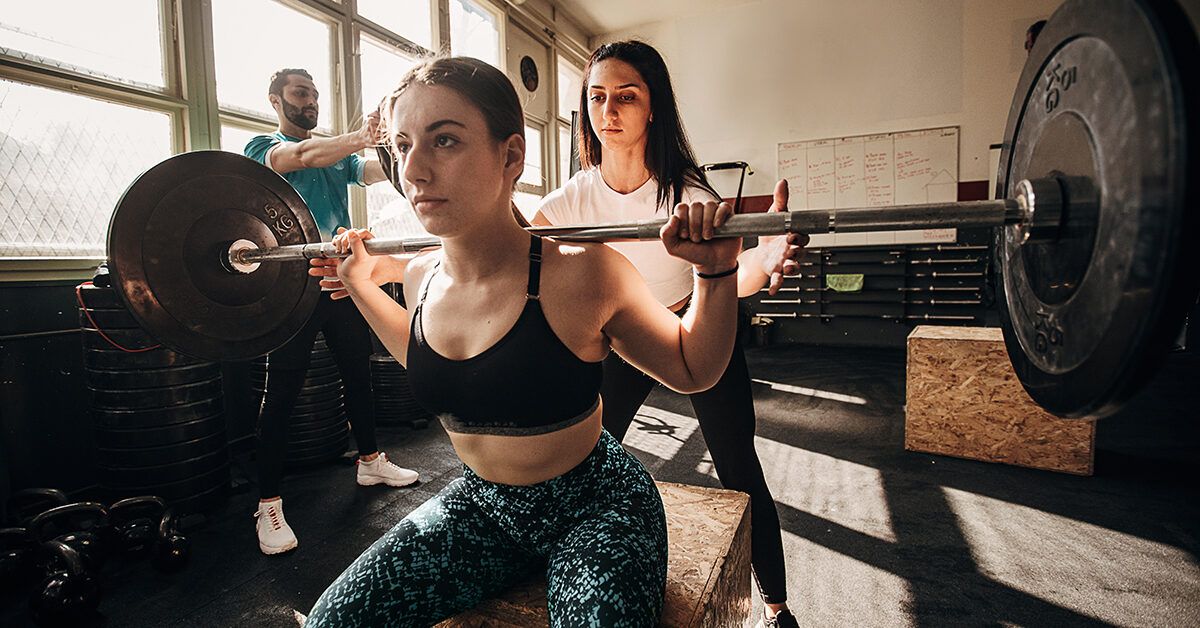
As you begin the eccentric phase, do not let your knees move forward. Instead, push your hips back as if you are trying to touch a wall behind you with your glutes. Your shins should remain nearly vertical throughout the entire descent. This vertical shin position shifts the weight away from the patellar tendon and onto the massive muscles of the posterior chain.
Lower yourself under control. One of the most important aspects of proper box squat technique for beginners is avoiding the "plop." You must stay tight and active as you make contact with the box.
The Pause and Active Seating
Once your glutes touch the box, do not relax. You are practicing active seating. This means your muscles remain under tension even though the box is supporting the weight. Stay upright, keep your chest high, and do not let your lower back round (butt wink). Hold this position for approximately one to two seconds. This pause is what ensures you are breaking the stretch reflex and relying solely on muscle contraction for the ascent.
The Ascent: Explosive Reversal
To start the concentric phase, do not rock forward to gain momentum. Instead, drive your heels into the floor and explode upward by contracting your glutes and hamstrings simultaneously. Think about "driving the floor away from you." The goal is to reach maximum velocity as quickly as possible. This is where the benefits of box squatting manifest in terms of explosive power.
Pro Tip from Westside Barbell: To maximize the rate of force development, imagine you are trying to jump through the ceiling with the weight on your back. The intent to move fast is just as important as the actual speed of the bar.
Determining Box Height and Equipment
A common question is how to determine correct box squat height. The answer depends on your specific goals and your current mobility.
- Parallel Box: The most common height where the top of the thigh is parallel to the floor. This is the gold standard for general strength and power.
- Below Parallel: Used to build "strength out of the hole." This requires significant hip mobility and core stabilization.
- Above Parallel: Often used for supra-maximal loading or by athletes focusing on the "power position" used in jumping and sprinting.
When selecting a box, ensure it is sturdy and won't slide. Many lifters use a dedicated squat box or stack several aerobic steps. If you use plates, make sure they are covered with a mat for comfort.
Programming for Explosive Strength and Hypertrophy
How you integrate this movement into your routine depends on whether you are looking for raw speed, maximum weight, or muscle size. Box squats are versatile enough to handle all three.
Building Explosive Power with Static-Dynamic Box Squats
If your goal is speed and athleticism, utilize the 3-week wave system. This involves performing box squats on a "Dynamic Effort" day.
- Week 1: 10-12 sets of 2 reps at 50% of your 1RM.
- Week 2: 10-12 sets of 2 reps at 55% of your 1RM.
- Week 3: 10-12 sets of 2 reps at 60% of your 1RM. Use short rest periods (45-60 seconds) to maintain high intensity and focus on the rate of force development.
Programming Box Squats for Maximal Strength Gains
When training for absolute strength, the box allows you to handle 85% or more of your 1RM with a higher degree of safety and technical precision.
- Sets/Reps: 3-5 sets of 1-3 reps.
- Focus: Maintaining perfect form under heavy loads. Because the box limits depth and prevents the "bounce," a 400-pound box squat is often harder than a 400-pound traditional squat.
Hypertrophy and Muscle Growth
To use box squats for muscle size, increase the volume.
- Sets/Reps: 3-4 sets of 8-10 reps.
- Focus: Maximum tension on the glutes and hamstrings. The forced pause increases the time under tension for the posterior muscles, which is a key driver for hypertrophy.
Common Mistakes to Avoid for Longevity
To reap the full rewards of this lift, you must avoid the technical pitfalls that can lead to injury or diminished returns. Understanding common box squat mistakes to avoid for knee health and spinal safety is essential for any long-term trainee.
Plopping and Relaxing The most frequent mistake is "plopping" onto the box. When a lifter loses core tension upon contact, the spine takes the brunt of the load. You must remain "tight" on the box. If you relax, you lose the ability to generate force safely, and you risk spinal compression.
Rocking for Momentum Many lifters subconsciously rock their torso forward to get off the box. This uses momentum rather than pure muscle force. If you find yourself rocking, the weight is likely too heavy. Lower the load and focus on a pure vertical drive from a dead stop.
Knee Cave (Valgus) As you drive off the box, your knees may want to cave inward. This is often a sign of weak glute medius or poor adductor recruitment. Actively "push the floor apart" with your feet to keep your knees tracked over your toes.
Using Box Squats to Fix Squat Depth Issues While using box squats to fix squat depth issues is effective, you must ensure the box is actually at the correct height. If you set the box too high, you are merely training a partial range of motion. Use a mirror or a coach to ensure that your "parallel" really is parallel.
FAQ
What are the benefits of box squats?
The benefits of box squats include the development of explosive starting strength, increased recruitment of the posterior chain muscles (glutes, hamstrings), and improved squatting technique. They also allow lifters to train around knee injuries by maintaining vertical shins and provide a consistent depth gauge for every repetition.
Are box squats better than regular squats?
Neither is objectively "better," as they serve different purposes. Regular squats are superior for utilizing the stretch reflex and building general hypertrophy through a continuous range of motion. Box squats are superior for building pure explosive power from a dead stop and targeting the posterior chain more aggressively while reducing stress on the knees.
How high should the box be for box squats?
For most lifters, the box should be at a height that brings the top of the hip joint parallel with the top of the knee. However, you can use a higher box for heavy overload work or a lower box to focus on building strength in the deepest part of the squat.
Do box squats help build more power?
Yes. Studies indicate that box squats can deliver a rate of force development (RFD) three to four times greater than regular squats. This is because the pause on the box requires the lifter to recruit more muscle fibers instantly to move the weight without the help of momentum or elastic energy.
Are box squats safer for your knees?
Generally, yes. By sitting back and keeping the shins vertical, box squats reduce the forward travel of the knees. This minimizes the shear force on the patellar tendon and the ACL, making it an excellent alternative for lifters with a history of knee pain or those looking to reduce joint wear during heavy training cycles.