Quick Facts
- Primary Target: Posterior chain including the glutes and hamstrings, specifically focused on explosive power development.
- Standard Load: For optimal training results, peak power output is usually reached at loads between 70% and 80% of an athlete's one-repetition maximum.
- Power Generation: The second pull phase is capable of generating roughly 5,500 Watts, which is five times the output of a maximal deadlift.
- Loading Advantage: Research shows that pulling from the floor allows for a one-repetition maximum approximately 7% higher than starting from the knee.
- Timeline: Most athletes can achieve technical mastery and significant strength carryover through a structured 6-week progression.
- Essential Gear: High-quality barbell, bumper plates, and a stable lifting surface are the only requirements.
Master the power clean form to unlock elite-level explosive power and total body strength. This guide covers the entire power clean progression steps, from the initial pull to the rapid turnover, ensuring you build a foundation of athletic performance while minimizing injury risk. Proper power clean form begins with a hip-width stance and a hook grip positioned just outside the knees. The movement involves a controlled first pull from the floor followed by an explosive second pull where the athlete achieves triple extension of the hips, knees, and ankles. The lift concludes with a rapid turnover of the elbows to catch the barbell in a front rack position on the shoulders while maintaining a stable half-squat stance.
Mobility Checkpoints: Prerequisites for the Catch
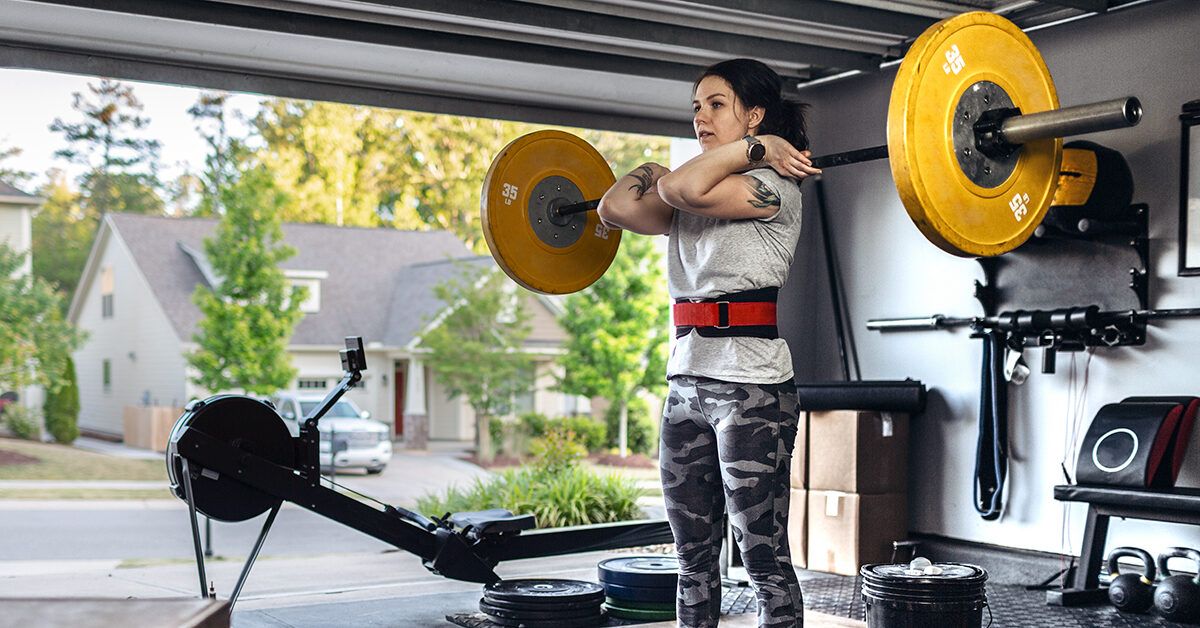
Before you even touch the bar, we need to address the kinetic chain requirements for the receiving position. The power clean is often failed not because of a lack of strength, but because of a lack of mobility. Specifically, thoracic spine extension and wrist flexibility are non-negotiable. If you cannot maintain a vertical torso with your elbows pointing forward, the bar will slide off your shoulders, or worse, put undue stress on your lower back.
The front squat serves as the ultimate diagnostic tool. If you can sit deep into a squat with a front rack position without your chest collapsing, you have the baseline mobility needed. Use the Popeye chest imagery during your setup: keep your ribcage high and your core stabilization tight. This ensures that when the bar meets your shoulders, your frame is a rigid shelf rather than a collapsing structure. If your wrists feel tight, dynamic stretching and soft tissue work on the forearms can help you achieve that rapid turnover.
The Setup: Proper Foot Stance and Grip for Power Clean Setup
A successful lift is determined in the first two seconds. You need a stable base that allows for both vertical drive and a quick transition. Start with an in-step stance, meaning your feet should be roughly hip-width apart, mirroring the position you would use for a maximal vertical jump. This foot placement optimizes force transfer from the floor through your legs.
The grip is equally critical. To find your ideal width, stand tall and place your thumbs at the outer edge of your thighs; this usually puts your hands just outside your knees when you hinge down. Implementing the hook grip—tucking your thumb under your index and middle fingers—is essential for maintaining a secure hold during the high-velocity second pull. Position the bar over your shoelaces, ensuring it is close to your shins but not touching, which sets the stage for a perfect barbell trajectory.
The Push and Jump: Mastering the Pull and Triple Extension
The movement is divided into two distinct phases: the first pull and the second pull. The first pull is a controlled push from the floor to the mid-thigh. Think of this as a leg press, not a back pull. Your hip height and shoulder-to-bar relationship should remain constant until the bar clears the knees. This patience is what allows for a clean transition into the explosive phase.
Once the bar reaches the power position at the mid-thigh, you enter the second pull. This is where the magic happens. You want to achieve full triple extension, which is the simultaneous extension of the hips, knees, and ankles. Imagine you are trying to jump through the ceiling while keeping your arms long like jump cables. Using the best coaching cues for power clean triple extension, such as "drive the floor away" and "jump tall," helps synchronize this violent upward acceleration. Maintaining an efficient bar path is about keeping the steel as close to your shirt as possible to prevent the weight from swinging outward and pulling you off balance.
The Punch: Achieving Explosive Turnover and the Catch
After the peak of the triple extension, the bar is essentially weightless for a fraction of a second. This is your window to move. Instead of pulling the bar up with your biceps, you must pull yourself under the bar. This transition is known as the turnover. The goal is to rotate your elbows high and fast around the bar, snapping them forward to create a solid front rack position.
The catch occurs in a half-squat or power position. Your feet will naturally shift slightly outward into a squat stance to provide a wider, more stable base. As the bar lands on the "shelf" created by your deltoids and clavicles, your core stabilization must be at its peak to absorb the force. If you catch the bar with your elbows pointing at the floor, the weight will likely pull you forward, leading to a missed lift or a rounded back.
Troubleshooting: Fixing Common Power Clean Mistakes for Better Form
Even experienced lifters fall into technical traps that limit their ceiling. One of the most frequent common power clean mistakes is the "arm pull." This happens when an athlete bends their elbows too early, attempting to row the bar up rather than using the legs for momentum. To correct this, focus on keeping the arms straight until the moment of triple extension.
Another issue is the "starfish" landing, where the lifter jumps their feet excessively wide to catch the bar. This indicates a lack of confidence in the pull or poor mobility. Fixing common power clean mistakes for better form like this requires going back to basics with hang cleans to reinforce a vertical drive. If you find the bar is crashing onto your shoulders, it is likely because the bar path is moving away from your body. Focus on the "elbows high and fast" cue to keep the trajectory tight.
Technical Specs for Power Development
| Training Goal | Intensity (% 1RM) | Sets | Reps | Rest Interval |
|---|---|---|---|---|
| Technical Mastery | 40-60% | 5 | 3 | 2-3 Minutes |
| Peak Power Output | 70-80% | 4-6 | 2-3 | 3 Minutes |
| Maximum Strength | 85%+ | 3-5 | 1-2 | 3-5 Minutes |
The 6-Week Performance Roadmap: Progression and Benefits
To master the lift, you should utilize a step by step power clean progression for beginners. Do not start from the floor on day one. Start from the top down.
- Weeks 1-2: Focus on the hip power clean and front squat. Establish the front rack position and the timing of the turnover.
- Weeks 3-4: Transition to hang cleans from the mid-thigh. This teaches you how to generate power from the hip hinge and emphasizes the second pull.
- Weeks 5-6: Move the starting position to the floor. Integrate the full power clean progression steps to synchronize the first pull with the explosive finish.
The power clean benefits for vertical jump and speed are well-documented in sports science. By training the rate of force development, you are teaching your nervous system to recruit motor units faster. This carries over directly to sprinting, jumping, and change-of-direction movements, making it a staple in any serious strength and conditioning program.
FAQ
How do you do a power clean with proper form?
Proper execution begins with a hip-width stance and a hook grip. You perform a controlled pull from the floor, keeping the bar close to your shins. As the bar reaches your mid-thigh, you explosively extend your hips, knees, and ankles while shrugging your shoulders. Finally, you pull yourself under the bar, rotating your elbows forward quickly to catch the barbell on your shoulders in a half-squat position.
What is the difference between a clean and a power clean?
The primary difference lies in the receiving position. In a standard clean, the athlete catches the bar in a full, deep squat. In a power clean, the athlete catches the bar in a partial squat, with the thighs remaining above parallel to the floor. This requires the bar to be pulled higher and emphasizes explosive power over pure lifting capacity.
What muscles are targeted by power cleans?
The power clean is a comprehensive total-body exercise. It primarily targets the posterior chain, including the glutes, hamstrings, and erector spinae. Additionally, it recruits the quadriceps for the initial drive, the trapezius for the shrug, and the core and shoulder stabilizers to secure the bar in the front rack position.
What are the most common power clean mistakes to avoid?
Lifters often struggle with pulling with the arms too early, which robs the movement of its power. Other common errors include rounding the lower back during the setup, jumping the feet too wide during the catch, and having slow elbow turnover. Keeping the bar close to the body and ensuring the elbows snap forward quickly are key fixes for these issues.
Can power cleans help with vertical jump and explosive power?
Yes, the power clean is one of the most effective tools for increasing a vertical jump. Because the movement requires the athlete to move a significant load with high velocity, it improves the rate of force development. This nervous system adaptation allows athletes to apply more force into the ground in a shorter amount of time, directly translating to higher jumps and faster sprint starts.