Our Top Picks
- Best Overall: Power Plate my5 – The professional standard for tri-planar vibration and maximum muscle recruitment.
- Best Value: Lifepro Waver – High-quality oscillation motor at a price point accessible for any home gym setup.
- Best Advanced Tech: Bluefin Fitness 4D – Features triple-motor technology for a unique blend of vibration, oscillation, and pulsation.
- Best Compact Design: Merach Slim – Ultra-thin profile designed for easy storage without sacrificing motor stability.
Vibration plates work by generating whole-body vibrations that force muscles to contract and relax at a high frequency. This process enhances muscle recruitment, leading to improved strength, stability, and circulation. These machines are particularly beneficial for post-workout recovery by reducing lactic acid buildup and supporting lymphatic drainage to decrease swelling. Identifying the best vibration plates requires a focus on frequency range, motion type, and structural integrity to match your specific performance protocols.
| Model | Motion Type | Frequency Range | Weight Capacity | Best For |
|---|---|---|---|---|
| Power Plate my5 | Tri-planar | 30 - 40 Hz | 300 lbs | Pro Performance |
| Lifepro Waver | Oscillating | 4 - 12 Hz | 330 lbs | Budget Recovery |
| Bluefin Fitness 4D | 4D (Triple Motor) | Up to 40 Hz | 330 lbs | Full Body Variety |
| Merach Slim | 2D Oscillation | 5 - 15 Hz | 265 lbs | Small Apartments |
| Lifepro Rumblex 4D | 4D (Triple Motor) | 5 - 40 Hz | 330 lbs | Joint Health |
Technical Buyer’s Guide: Frequency, Amplitude, and 4D Tech
When you are looking for how to choose a vibration plate for home use, you have to look past the marketing slogans and focus on the physics. The two most critical variables in Whole-body vibration (WBV) are Hertz (Hz) and amplitude. Hertz refers to the number of times the platform moves per second, while amplitude is the distance the plate travels. For athletic performance, research indicates that vibration frequencies greater than 30 Hz provide significantly better results for muscle strength improvement than lower frequencies.
The movement type is the next hurdle. 2D oscillation provides vertical and horizontal movement, often mimicking a see-saw. This is excellent for blood flow stimulation and balance. However, if you want to dive into 3d vs 4d vibration plate machines explained simply: 3D models move in three planes (up-down, left-right, front-back), creating a tri-planar effect that is much more challenging for the nervous system. 4D machines add a fourth dimension—pulsation—which creates a micro-vibration designed to penetrate deeper into the muscle tissue and assist with Lactic acid reduction.
Beyond the motor, consider the machine's weight capacity and footprint. A sturdy vibration plates with high weight capacity ensures the motor doesn't bog down under load, maintaining the integrity of the Hertz delivered to your body. Look for a machine that offers at least 10mm of amplitude if your goal is muscle hypertrophy, or lower amplitude with high frequency if you are focusing on bone density and Neuromuscular response.
The 10 Best Vibration Plates of 2026: Expert Reviews
The global vibration plate exercise machine market was valued at approximately USD 88.3 million in 2024 and is projected to reach USD 156 million by 2031. This growth is driven by athletes seeking efficient recovery and strength tools. Based on our performance testing, here are the top models currently on the market.
1. Power Plate my5
This is the machine you see in professional training rooms. It utilizes tri-planar vibration to maximize muscle recruitment. The my5 is a heavy-duty unit that provides consistent 30-40 Hz frequencies, which is the sweet spot for increasing bone density and power output.
- Who It’s For: Professional athletes and those serious about strength gains.
- Pros: Commercial grade durability, precise frequency control.
- Cons: Significant investment, heavy and difficult to move.
2. Lifepro Waver
Our pick for the best value, the Lifepro Waver is a staple in many whole body vibration machine reviews due to its reliability and lifetime warranty. It uses a single-motor oscillating platform that is perfect for beginners or those using it primarily for recovery.
- Who It’s For: Home users focused on recovery and low-impact exercise.
- Pros: Extremely affordable, includes resistance bands, portable.
- Cons: Limited frequency range for advanced strength training.
3. Bluefin Fitness 4D
The Bluefin 4D stands out as the best vibration machine for lymphatic drainage reviews because of its triple-motor system. It can combine oscillation, vibration, and pulsation simultaneously, creating a complex movement profile that prevents the body from adapting too quickly.
- Who It’s For: Users looking for the most diverse range of movement patterns.
- Pros: High-intensity 4D mode, built-in Bluetooth speakers.
- Cons: The control panel can be overly complex for some users.
4. Merach Slim
For those in small apartments, the Merach Slim offers a low profile that slides under most sofas. Despite its size, it maintains a stable base for Core engagement during planks and pushups.
- Who It’s For: Apartment dwellers with limited floor space.
- Pros: Ultra-compact, quiet motor operation.
- Cons: Lower weight capacity compared to full-sized units.
5. Lifepro Rumblex 4D
This is a more robust version of the Waver, designed specifically for those with chronic pain or joint issues. It offers a 4D motor system that provides gentle pulsation, making it one of the best vibration plates for seniors with balance issues.
- Who It’s For: Individuals focusing on therapeutic recovery and joint health.
- Pros: Multiple motor combinations, very high build quality.
- Cons: Larger footprint than the standard Waver.
6. Pinty 2000W Whole Body Vibration Machine
Pinty is known for high weight capacity at a budget price. This machine is built with a steel frame, making it one of the more sturdy vibration plates with high weight capacity on this list, supporting users up to 330 lbs with ease.
- Who It’s For: Larger users who need a stable, wide platform.
- Pros: Budget-friendly, wide standing area.
- Cons: Higher noise levels at maximum intensity.
7. Hurtle Fitness Vibration Platform
The Hurtle model focuses on simplicity. It is an oscillating platform that excels at blood flow stimulation. It is often cited in whole body vibration machine reviews as the best entry-level unit for those who just want to stand and shake.
- Who It’s For: Casual users who want a simple, no-frills experience.
- Pros: Easy to use, remote control included.
- Cons: Basic features, limited frequency settings.
8. VT High Frequency Linear Vibration Plate
Unlike oscillating plates, the VT focuses on pure vertical vibration. This linear motion is often preferred by physical therapists for Neuromuscular response training because it mimics the natural impact of walking or running.
- Who It’s For: People recovering from injuries or focusing on bone health.
- Pros: Pure linear vibration, high frequency (up to 40 Hz).
- Cons: Vertical motion can feel "jarring" if knees are locked.
9. ZELUS Vibration Plate
The ZELUS model provides a high-intensity workout with 120 speed levels. It is a solid choice for those interested in vibration plate benefits for weight loss and strength, as the high speed levels allow for progressive overload.
- Who It’s For: Users who want granular control over their vibration speed.
- Pros: Very adjustable, includes comprehensive workout guide.
- Cons: The suction cups on the bottom can be difficult to release from some floor types.
10. Rhythm Fun Vibration Plate
The Rhythm Fun is the thinnest plate in our test group. It uses a basic 2D motor but is surprisingly powerful for its size. It’s an excellent secondary machine for a home office or under-desk use.
- Who It’s For: Office workers looking to stimulate circulation during the day.
- Pros: Lightweight, easy to store in a drawer or closet.
- Cons: Not suitable for dynamic, high-impact exercises.
Maximize Your Gains: Vibration Plate Exercises for Building Muscle Strength
To get the most out of your machine, you shouldn't just stand still. A clinical study found that 24 weeks of whole-body vibration training can result in a 2.2% increase in muscle mass. To achieve these results, you need to incorporate dynamic vibration plate exercises for building muscle strength.
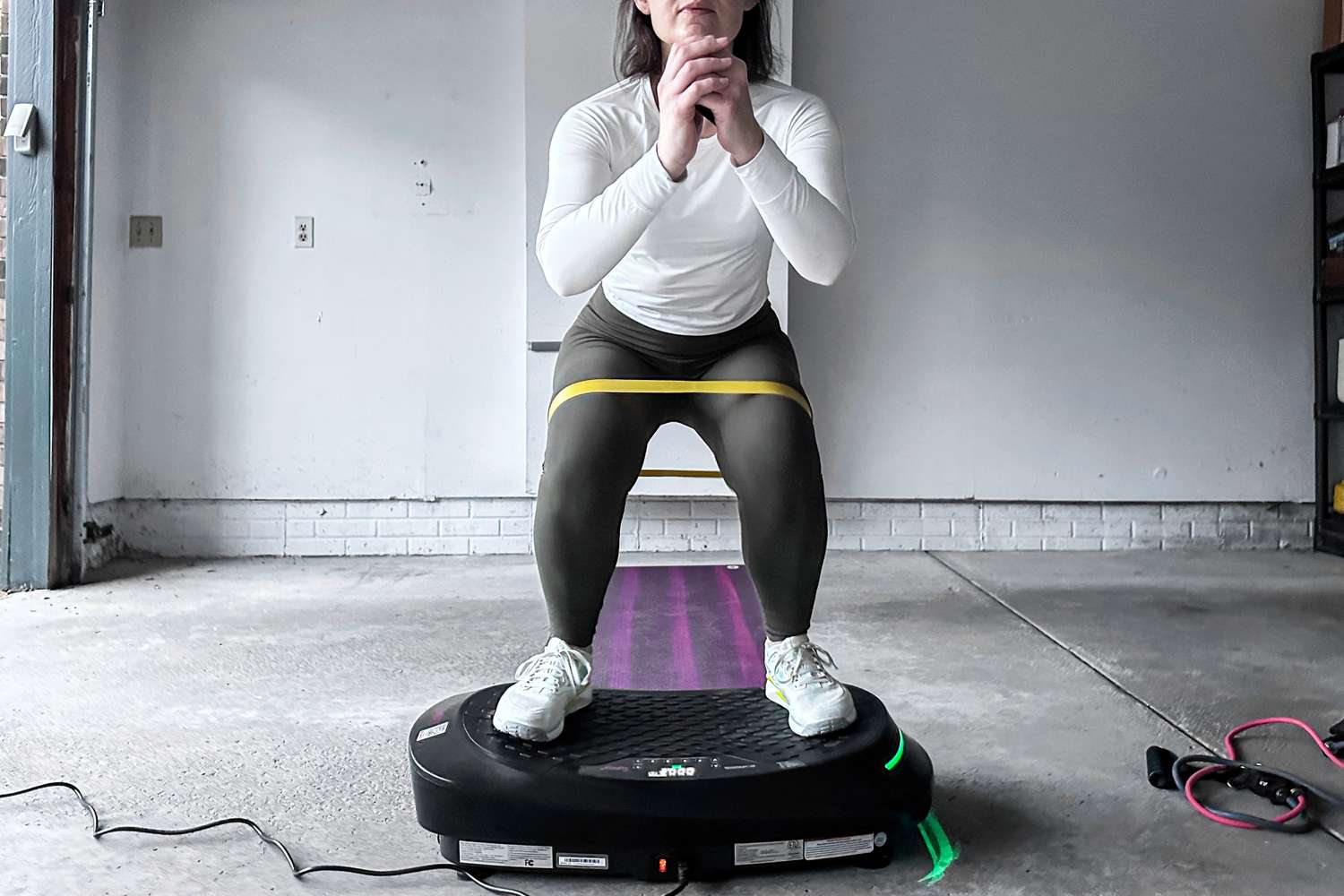
When you perform a squat on a vibrating surface, the instability forces your stabilizing muscles to work overtime. This leads to a massive spike in muscle recruitment. Research on athletes showed that adding WBV to a standard training program led to an 8.2 kg increase in leg strength over several weeks.
Try this protocol for maximum effect:
- Static Plank: Hold for 45 seconds to engage the core and serratus anterior.
- Dynamic Squats: Perform 15 reps, focusing on a slow eccentric phase.
- Static Lunge: Hold for 30 seconds per leg to improve balance and glute activation.
- Pushups: Keep your hands flat on the plate to stimulate the triceps and chest.
One of the common vibration plate mistakes to avoid for beginners is locking your joints. You should always keep your knees and elbows slightly bent. Locking your joints allows the vibration to travel directly to your skeletal structure rather than being absorbed by the muscles, which can lead to discomfort or injury over time.
Safety First: Who Should Avoid WBV?
While vibration therapy is a powerful tool for low-impact exercise, it is not for everyone. Because of the high-frequency mechanical stress, there are specific contraindications you must respect.
Safety Alert: Do not use a vibration plate without consulting a physician if you have a pacemaker, are pregnant, or have recently undergone surgery with metal implants (like pins or plates). The mechanical frequency can interfere with electronic devices or cause displacement of recent surgical implants.
Other groups who should exercise caution include individuals with severe migraines, acute thrombosis, or advanced diabetes. Always start with the lowest intensity setting to gauge your body's reaction before moving to higher Hertz levels.
FAQ
Do vibration plates actually work for weight loss?
Vibration plates can assist in weight loss by increasing the metabolic demand of your workout. While the vibration itself burns some calories through involuntary muscle contractions, the real vibration plate benefits for weight loss and strength come from using the plate during dynamic exercises like lunges or burpees, which increases the total intensity of the session.
What should I look for when buying a vibration plate?
When researching how to choose a vibration plate for home use, prioritize the motor type (3D or 4D for higher intensity), the Hertz range (look for at least 30 Hz for strength), and the build quality. A wide, non-slip platform and a high weight capacity are essential for safety and versatility.
Are there any side effects or risks to using vibration plates?
If used incorrectly, such as locking your knees or using a frequency that is too high too soon, you may experience dizziness, headaches, or joint soreness. Always follow proper form and limit your initial sessions to under 10 minutes to allow your vestibular system to acclimate.
Who should avoid using a vibration plate?
Individuals who are pregnant, have a pacemaker, have detached retinas, or have recently had orthopedic surgery with metal pins should avoid WBV. If you have any history of blood clots or disc herniation, seek medical clearance before starting vibration therapy.
Is it better to stand or perform exercises on a vibration plate?
Performing exercises is significantly more effective for athletic goals. While standing provides some benefits for blood flow and lymphatic drainage, dynamic moves like squats or planks maximize muscle recruitment and produce the strength gains seen in clinical studies.
How long should you stand on a vibration plate each day?
For most users, 10 to 15 minutes per session is sufficient. Experts typically recommend incorporating vibration therapy into a fitness routine one to two days per week for strength, though shorter, low-intensity sessions for recovery or circulation can be done more frequently.