Quick Facts
- Safety Status: Generally safe for healthy individuals with clear nasal passages; contraindicated for those with obstructive sleep apnea (OSA).
- Primary Benefit: Facilitates nitric oxide production and switches the body into a parasympathetic nervous system state.
- Clinical Efficacy: Shown to reduce the snoring index by 47% in mild cases of sleep apnea.
- Risk Profile: Potential for 40% reduction in airflow for individuals with significant nasal obstruction.
- Material Requirement: Requires medical-grade hypoallergenic adhesive or micropore tape; household tapes are strictly prohibited.
- User Interest: Search volume for this practice has surged by 340% since early 2022, highlighting its transition from a niche biohack to a mainstream wellness trend.
Mouth taping for sleep is generally safe for healthy individuals who can breathe clearly through their nose, but it carries risks for those with underlying conditions. It should be avoided by people with obstructive sleep apnea (OSA), chronic nasal congestion, or lung diseases like COPD. Potential side effects include skin irritation, anxiety, and restricted airflow if the nasal passages become blocked. Consulting a doctor before starting is recommended to rule out serious sleep disorders.
The Science of Nasal Breathing: Why It Matters
To understand why people are taping their mouths shut at night, we must first look at the biological superiority of the nose. Evolution designed the nasal passages as a sophisticated filtration and humidification system. When we breathe through the nose, the air is warmed and moistened before it reaches the lungs, reducing irritation to the delicate bronchial tissues. However, the most compelling reason for the rise of mouth taping for sleep lies in a simple molecule: nitric oxide.
Nitric oxide production occurs primarily in the paranasal sinuses. As we inhale through the nose, this gas is carried into the lungs, where it acts as a potent vasodilator. This improves the efficiency of oxygen exchange and increases the oxygen concentration in the blood. By contrast, chronic mouth breathing bypasses this mechanism, often leading to a state of chronic over-breathing or hypocapnia (low carbon dioxide levels), which ironically makes it harder for tissues to release oxygen.
Furthermore, nasal breathing is a direct trigger for parasympathetic nervous system activation. This "rest and digest" state is the physiological prerequisite for restorative REM sleep. When the mouth remains closed, the tongue is more likely to rest against the roof of the mouth, keeping the airway stable and preventing the soft tissues from collapsing—a primary cause of snoring. By promoting xerostomia prevention (avoiding dry mouth), nasal breathing also preserves the oral microbiome health, protecting teeth and gums from the acidic environment that thrives when saliva production drops during the night.
Clinical Evidence: Snoring and Sleep Quality
The surge in popularity of this practice is backed by more than just social media anecdotes. A notable clinical study of 20 patients with mild obstructive sleep apnea found that mouth taping reduced the median apnea/hypopnea index (AHI) and the median snoring index (SI) by 47% each. This suggests that for a specific subset of people, simply keeping the mouth closed can significantly stabilize the upper airway.
However, the evidence also serves as a warning. Research published in JAMA Otolaryngology–Head & Neck Surgery indicates that manual mouth closure during sleep can worsen airflow by approximately 40 percentage points for individuals who rely most heavily on mouth breathing due to internal nasal obstructions. This highlights the phenomenon of upper airway resistance. If your nose is blocked by a deviated septum or nasal polyps, forcing nasal breathing can lead to nocturnal oxygen saturation drops.
When looking for mouth taping for snoring benefits and reviews, it is essential to distinguish between "simple snoring" (vibration of tissue) and "obstructive apnea" (complete blockage of the airway). While the former often responds well to nasal breathing, the latter requires medical intervention such as CPAP therapy or myofunctional therapy.
Safety First: Who Should Avoid Mouth Taping?
Despite the benefits of nasal breathing during sleep, this practice is not a universal solution. Safety hinges on the ability of the individual to maintain adequate ventilation through the nostrils alone. If you frequently wake up with a parched mouth or a morning headache, these may be signs of mouth breathing, but they can also be "red flags" for undiagnosed obstructive sleep apnea (OSA).
| Group | Recommendation | Reason |
|---|---|---|
| Suspected OSA Patients | Avoid | Taping may mask symptoms or worsen oxygen desaturation. |
| Chronic Congestion | Avoid | Nasal blockage makes mouth taping side effects and risks like suffocation feel real. |
| Children Under 4 | Strictly Avoid | Higher risk of respiratory distress and inability to remove tape. |
| Alcohol/Sedative Users | Avoid | Reduced arousal response makes it dangerous if the airway becomes blocked. |
| Severe Lung Disease | Avoid | Conditions like COPD require maximum breathing flexibility. |
Who should avoid mouth taping for sleep? Anyone who experiences gasping for air during the night or significant daytime sleepiness should seek a sleep study first. Using tape to "force" nasal breathing in a person with a structurally narrow airway can be counterproductive and, in rare cases, dangerous.
Expert Tip: Before you try taping at night, perform a "nasal patency" test. If you cannot breathe comfortably through your nose for three minutes while awake and relaxed, you likely have an obstruction that needs to be addressed by an ENT (Ear, Nose, and Throat) specialist before you even consider mouth tape.
The 6-Step Nose Unblocking Exercise
If you find that one nostril is often blocked, you can use the Buteyko breathing method to temporarily clear the passages. This is a vital part of safe mouth taping techniques as it ensures you have the capacity for nasal airflow before you sleep.
- Sit upright with your shoulders relaxed.
- Take a small, silent breath in through your nose and a small, silent breath out.
- Pinch your nose with your fingers and hold your breath.
- Gently nod your head up and down or sway from side to side while holding your breath.
- Hold your breath for as long as you comfortably can until you feel a relatively strong urge to breathe.
- Release your nose and breathe in through it as calmly as possible. Calm your breathing immediately.
Wait for one to two minutes before repeating. If you can clear your nose using this diaphragmatic breathing approach, you are a better candidate for experimenting with tape.
Beginner's Protocol: How to Start Safely
Transitioning to nasal breathing is a marathon, not a sprint. To learn how to start mouth taping safely for beginners, you must allow your nervous system to habituate to the sensation of a closed mouth.
- Daytime Acclimatization: Wear a small piece of tape while watching TV or reading for 20 to 30 minutes. This helps desensitize the "panic" response some people feel when their mouth is covered.
- Skin Preparation: Use a light barrier cream or petroleum jelly around the lips (but not on the area where the tape will stick) to prevent the adhesive from tugging on sensitive skin.
- The "Postage Stamp" Method: Instead of sealing your entire mouth from corner to corner, place a single vertical strip of tape over the center of your lips. This allows for emergency airflow through the sides of the mouth if you need to cough or breathe deeply.
- Consistency: It may take several nights to keep the tape on until morning. If you wake up and find you have ripped it off in your sleep, don't worry—this is a normal part of the adaptation process.
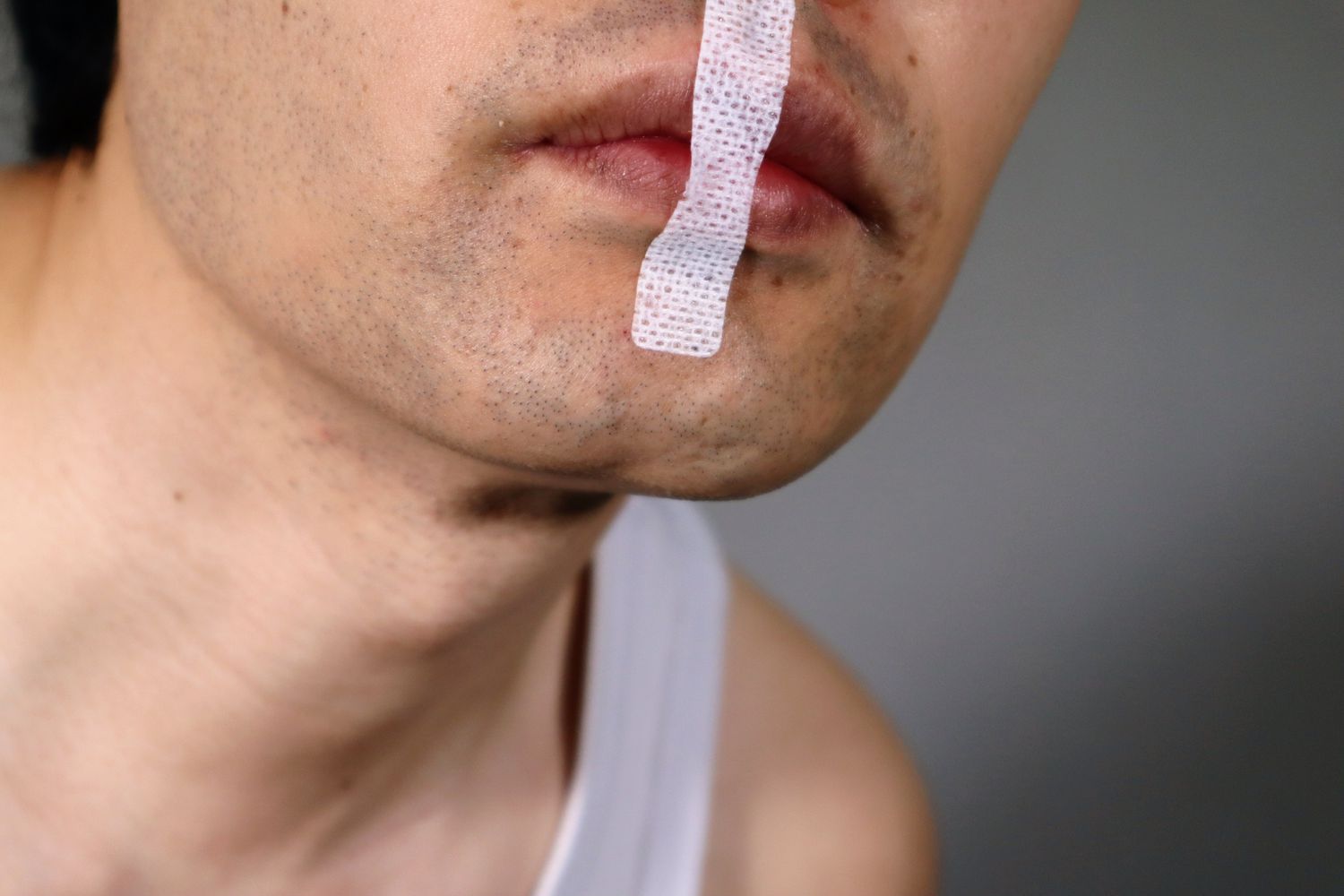
To further how to prevent skin irritation from mouth taping, always pull the tape off gently in the direction of hair growth in the morning, ideally using a bit of warm water or oil to loosen the adhesive.
Choosing the Right Materials: Tapes vs. Dilators
The most common mistake beginners make is using the wrong adhesive. Duct tape, scotch tape, or heavy-duty bandages should never be used. These can cause severe skin damage or allergic rhinitis symptoms.
The best type of tape for mouth taping at night is a medical-grade micropore tape or a specialized hypoallergenic adhesive designed for the face. These are breathable and designed to release without tearing the skin.
Comparison: Mouth Tape vs. Nasal Strips
| Feature | Mouth Tape | Nasal Strips/Dilators |
|---|---|---|
| Primary Goal | Directs airflow to the nose | Mechanically opens the nostrils |
| Best For | Habitual mouth breathers | People with narrow nasal valves |
| Comfort | Requires adjustment period | High, but may lose stickiness with sweat |
| Mechanism | Enhances nitric oxide production | Reduces upper airway resistance |
For many, a combination is best. When considering mouth taping vs nasal dilators for better breathing, some find that using a nasal strip to physically pull the nostrils open makes the transition to mouth taping much more comfortable.
FAQ
Is mouth taping for sleep safe?
It is generally safe for healthy adults who do not have nasal obstructions or sleep disorders like apnea. However, it can be risky if your nasal passages are blocked, as it may restrict your total oxygen intake. Always test your nasal breathing while awake before trying it during sleep.
What are the benefits of mouth taping at night?
The primary benefits include the promotion of nasal breathing, which increases nitric oxide production, activates the parasympathetic nervous system, and helps achieve restorative REM sleep. It also prevents dry mouth, which protects oral microbiome health and reduces the risk of cavities and gum disease.
Does mouth taping help stop snoring?
Yes, for many people, mouth taping can significantly reduce snoring. By keeping the mouth closed, it prevents the tongue and soft tissues in the throat from collapsing backward, which is the main cause of the vibration known as snoring. However, it will not cure snoring caused by structural issues like a deviated septum.
What kind of tape should be used for mouth taping?
You should only use medical-grade micropore tape or a hypoallergenic adhesive specifically designed for sensitive skin. Never use household tapes like duct tape or masking tape, as these can cause skin irritation, allergic reactions, and are difficult to remove safely.
Who should avoid mouth taping for sleep?
Individuals with obstructive sleep apnea (OSA), chronic nasal congestion, allergic rhinitis, or significant lung disease like COPD should avoid this practice. It is also not recommended for children under the age of four or anyone who has consumed alcohol or sedatives before bed.
Conclusion: The Expert Verdict
Mouth taping for sleep is more than just a viral curiosity; it is a practical application of respiratory physiology. By shifting the body from mouth breathing to nasal breathing, we unlock access to better oxygenation, improved dental health, and a more stable nervous system.
However, as an editor focused on functional health, I must emphasize that tape is a tool, not a cure-all. It should be used as part of a broader strategy that might include myofunctional therapy, weight management, and side-sleeping. If you find yourself consistently struggling to breathe through your nose, prioritize a consultation with a professional to ensure your airway is clear. When done correctly and safely, mouth taping can be a transformative step toward the high-quality, restorative sleep that is the foundation of longevity.