Quick Facts
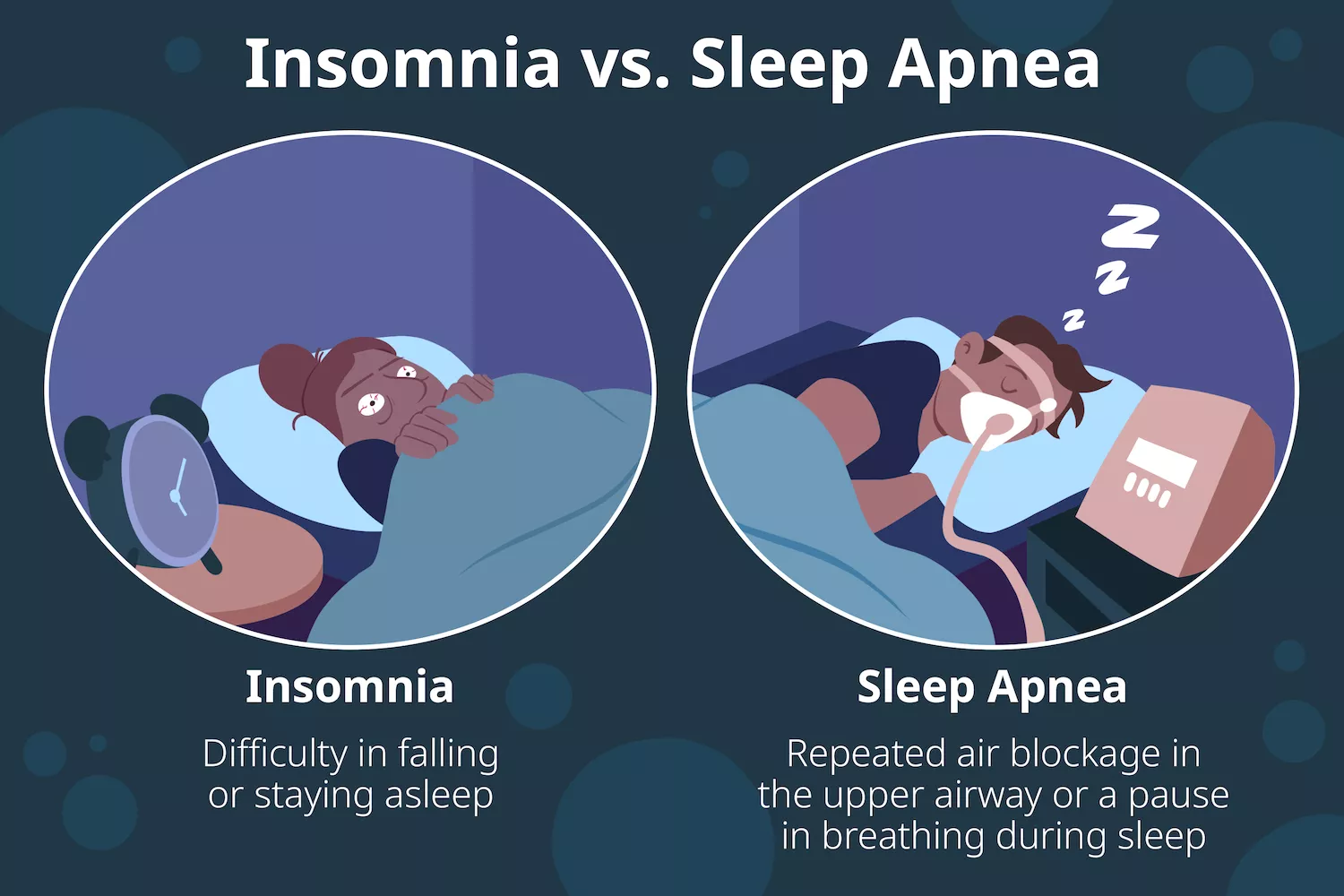
- Mechanism: Sleep apnea is a physical airway obstruction; insomnia is a state of psychological or physiological hyperarousal.
- Primary Warning Sign: Gasping or choking for apnea; racing thoughts or inability to quiet the mind for insomnia.
- Daytime Impact: Apnea causes involuntary sleepiness; insomnia leads to heavy fatigue without sleep onset.
- Prevalence: Roughly 40% of people with insomnia also suffer from obstructive sleep apnea (COMISA).
- Diagnosis: Apnea requires Polysomnography (PSG); insomnia is diagnosed via clinical history and sleep diaries.
The primary difference between insomnia vs sleep apnea is the root cause: sleep apnea is a physical breathing disorder involving recurring airway obstructions, whereas insomnia is a condition of hyperarousal where the mind remains active, preventing sleep initiation or maintenance. Identifying the correct trigger is essential for distinguishing sleep apnea and insomnia to ensure you receive the appropriate treatment for your specific nighttime struggle.
Sleep is often described as the third pillar of health, alongside nutrition and exercise. However, for millions of people, that pillar feels increasingly unstable. When you lie awake at night, the frustration is universal, but the biological reasons behind your restlessness can vary wildly. Determining how to tell if it's insomnia or sleep apnea is more than just a matter of curiosity; it is a clinical necessity. While both conditions result in poor sleep, one is a mechanical failure of the respiratory system, while the other is often a neurological refusal to power down.
Core Mechanisms: Breathing vs. Brain
To understand why you aren't sleeping, we have to look at what is happening inside your body after the lights go out. Obstructive Sleep Apnea (OSA) is fundamentally a structural issue. When you fall asleep, the muscles in your throat relax. For those with apnea, these muscles relax so much that the tissue collapses, creating an Upper Airway Obstruction. This physical blockage stops your breathing, forcing your brain to "panic" and wake you up just enough to take a breath. This cycle can happen dozens of times per hour, severely damaging your Sleep Architecture.
In contrast, insomnia is often described as a state of hyperarousal. In a healthy sleeper, the brain receives signals to turn off the "wake" centers and activate "sleep" centers. For someone with insomnia, those wake signals remain jammed in the "on" position. This can be psychophysiological insomnia, where the very act of trying to sleep creates anxiety that keeps you awake, or it could be tied to external stressors. While apnea is a struggle to keep the air flowing, insomnia is a struggle to get the brain to relinquish control. Both lead to significant Sleep Fragmentation, but the "why" determines whether you need a breathing mask or a behavioral intervention.
| Feature | Insomnia | Sleep Apnea |
|---|---|---|
| Primary Cause | Hyperarousal (Brain remains active) | Airway obstruction (Breathing stops) |
| Typical Night | Tossing, turning, racing thoughts | Loud snoring, gasping, frequent waking |
| Daytime Feeling | Tired but "wired"; unable to nap | Dangerously sleepy; dozing off in chairs |
| Snoring | Generally not present | Common in 50% to 60% of cases |
| Diagnosis | Clinical history & ISI score | PSG or Home Sleep Test |
Nighttime Symptoms: What Happens in the Dark?
Identifying sleep apnea vs insomnia symptoms often requires a bit of detective work, sometimes involving a bed partner. If you have insomnia, your night is likely characterized by a quiet but agonizing consciousness. You might lie in bed for hours waiting for sleep to arrive, or you might wake up at 3:00 AM and find it impossible to drift back off. The experience of waking up gasping for air vs insomnia awakenings is a key clinical differentiator. In insomnia, you simply find yourself awake—alert and often frustrated.
If the culprit is sleep apnea, the symptoms are more violent. Frequent loud snoring is a common symptom in 50% to 60% of people with obstructive sleep apnea, whereas it is generally not a symptom associated with insomnia. You might not even remember waking up, but your partner might notice long pauses in your breathing followed by a loud snort or gasp. These micro-awakenings prevent you from reaching deep, restorative sleep stages. Many patients also report waking up with a very dry mouth or a sore throat, which are classic signs of sleep breathing disorders.
Daytime Impact: Fatigue vs. Sleepiness
One of the most fascinating ways to distinguish these conditions is to look at how you feel at 2:00 PM the following day. There is a distinct difference between insomnia fatigue and sleep apnea sleepiness that clinicians use to guide diagnosis.
People with insomnia usually suffer from "fatigue." You feel exhausted, your mood is low, and your concentration is shot, but if you tried to take a nap, you probably couldn't. Your brain is still in that state of hyperarousal. On the other hand, people with obstructive sleep apnea are significantly more prone to dozing off involuntarily during the day. This is known as Excessive Daytime Sleepiness (EDS). If you find yourself falling asleep while reading, watching TV, or—most dangerously—stopped at a red light, it is a strong indicator of apnea.
While both groups may struggle with morning headaches and irritability, the "ability to nap" is a major clue. The apnea patient’s body is desperate for oxygen and rest, whereas the insomnia patient’s body is stuck in a loop of unwanted alertness. Improving your Sleep Hygiene can help with mild cases of both, but it rarely solves the underlying physiological drive of OSA.
COMISA: When You Have Both
Medicine rarely fits into neat little boxes, and sleep is no exception. It is entirely possible to suffer from both conditions simultaneously, a state known as comorbid insomnia and sleep apnea (COMISA) symptoms. In fact, these two disorders often feed into each other in a destructive cycle. Approximately 50% to 60% of patients with obstructive sleep apnea experience insomnia symptoms, and roughly 40% of individuals with insomnia also have comorbid sleep apnea.
In COMISA, the physical breathing interruptions from apnea cause the person to wake up. Once awake, the brain's hyperarousal takes over, and the person finds they cannot get back to sleep. They may begin to associate the bed with the stress of being awake, which is how sleep apnea leads to insomnia symptoms over time. Treating COMISA is notoriously difficult because using a CPAP machine (for apnea) can sometimes be frustrating for someone who already struggles with falling asleep, potentially worsening the insomnia component if not managed carefully.
Clinical Diagnosis and Treatment Pathways
If you suspect your sleep is compromised, the path to recovery begins with a professional evaluation. To diagnose apnea, doctors look for the physiological markers of obstructive sleep apnea vs psychophysiological insomnia using objective data. The gold standard is Polysomnography (PSG), a sleep study where technicians monitor your brain waves, oxygen levels, and breathing patterns. From this, they calculate your AHI (Apnea-Hypopnea Index) to determine the severity.
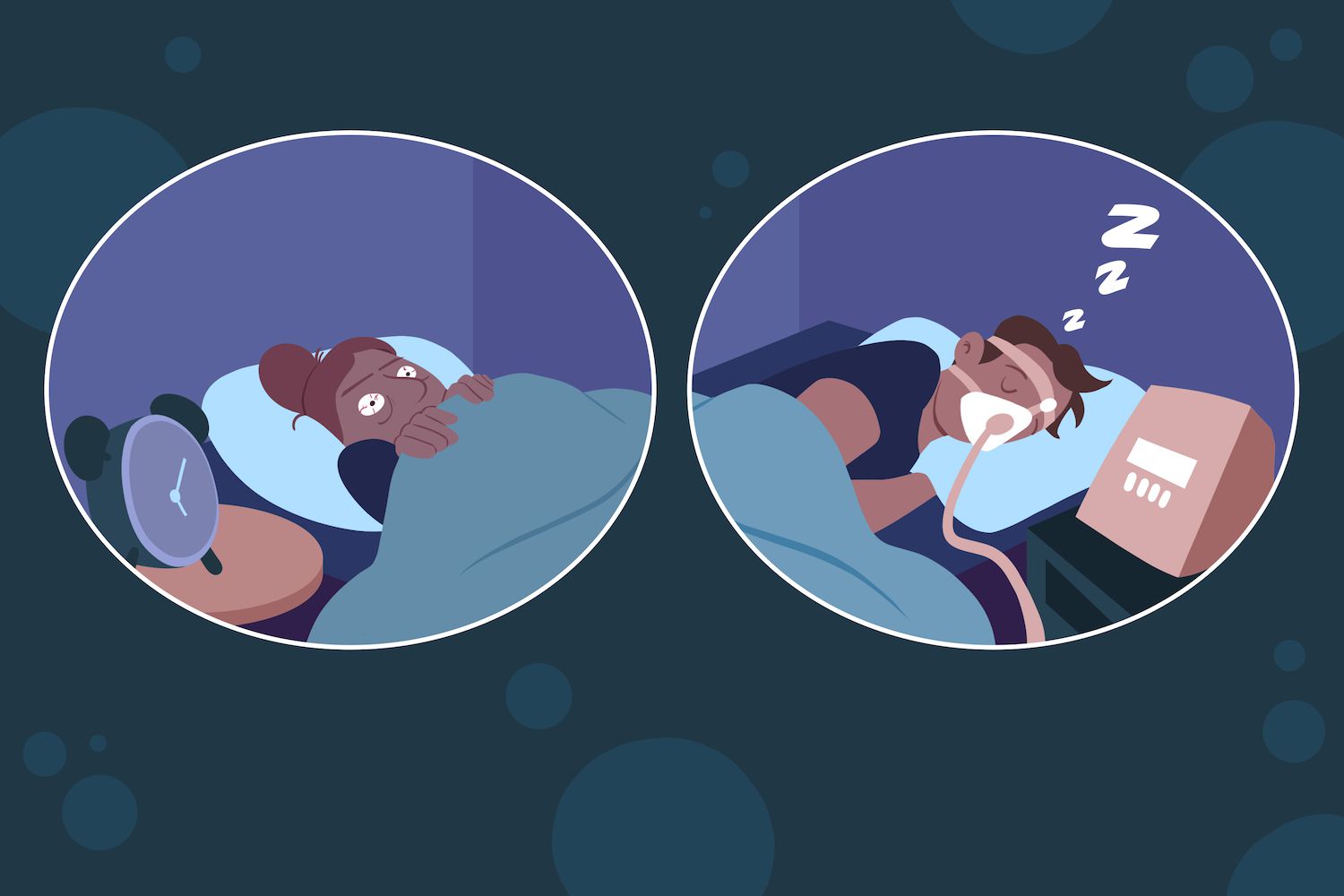
For insomnia, the diagnosis is usually more subjective. Doctors will use the ISI (Insomnia Severity Index) and ask you to keep a sleep diary for several weeks. This helps them see patterns in your sleep onset and maintenance. A sleep study for insomnia vs sleep apnea diagnosis is rarely used for "pure" insomnia unless the doctor suspects another underlying movement disorder or breathing issue.
The treatment paths are quite different:
- For Sleep Apnea: The primary treatment is Continuous Positive Airway Pressure (CPAP) therapy, which uses a machine to keep the airway open. Oral appliances or surgery may also be options.
- For Insomnia: The most effective treatment is Cognitive Behavioral Therapy for Insomnia (CBT-I). This involves changing the thoughts and behaviors that prevent sleep, such as restructuring your sleep schedule and managing stimulus control.
If you have COMISA, the best approach is often a combination of both. Research shows that addressing the insomnia with CBT-I first or concurrently can actually improve a patient's ability to tolerate their CPAP machine, leading to better long-term outcomes.
FAQ
What is the main difference between insomnia and sleep apnea?
The primary difference lies in why the sleep is interrupted. Sleep apnea is a physical condition where the airway becomes blocked, stopping breathing and forcing the brain to wake up. Insomnia is a condition of hyperarousal where the mind or body stays in a "wake" state, making it difficult to fall asleep or stay asleep despite having the time and opportunity to do so.
Can you have both insomnia and sleep apnea at the same time?
Yes, this is known as COMISA (Comorbid Insomnia and Sleep Apnea). It is quite common, with roughly 40% of insomnia patients also showing signs of sleep apnea. In these cases, the breathing struggles of apnea often trigger the psychological wakefulness of insomnia, creating a complex cycle that requires treating both conditions.
Does untreated sleep apnea cause insomnia?
Untreated sleep apnea can certainly lead to insomnia symptoms. When the brain is repeatedly shocked into wakefulness to resume breathing, it can become "conditioned" to stay alert. Over time, the person may develop anxiety about going to bed or find that they are unable to return to sleep after an apnea event, effectively developing chronic insomnia.
Can insomnia be a symptom of sleep apnea?
Yes, many people who visit a doctor for insomnia—specifically those who complain of "maintenance insomnia" or waking up frequently—actually have undiagnosed sleep apnea. Their primary complaint is "I can't stay asleep," but the underlying reason for those awakenings is an Upper Airway Obstruction that they aren't consciously aware of.
Is waking up gasping for air insomnia or sleep apnea?
Waking up gasping, choking, or feeling short of breath is a hallmark sign of sleep apnea. While insomnia involves lying awake or waking up with a racing mind, it rarely involves the physical sensation of struggling for breath. If you experience gasping at night, it is highly recommended to seek a sleep study to check for airway obstructions.