Quick Facts
- Fiber Winner: Cauliflower takes the lead for overall density, providing 7.8% RDA of total dietary fiber per serving.
- Calorie Count: Cabbage is the lighter option for volume eaters, containing only 22 calories per cup.
- Gut Health Star: Fermented cabbage (sauerkraut or kimchi) provides live probiotics that cauliflower lacks in its raw or cooked state.
- Micronutrient Leader: Cabbage provides significantly more Vitamin K (85% DV) and Vitamin C (54% DV) compared to cauliflower.
- Cooking Tip: Steam blanching these vegetables for 3–5 minutes preserves 30% more antioxidants than boiling or microwaving.
- Digestibility: Cauliflower contains specific complex sugars that may cause more gas in raw form, while cabbage offers higher levels of insoluble fiber to prevent constipation.
When comparing cabbage vs cauliflower for digestion, cauliflower provides a higher total dietary fiber density (7.8% of RDA), while cabbage excels in insoluble fiber for bowel regularity. Both are essential cruciferous vegetables that support the gut microbiome through prebiotic fiber and glucosinolates.
The Fiber Face-Off: Cabbage vs Cauliflower for Gut Health
As we move into the 2026 superfood landscape, the humble Brassica family is reclaiming its throne. For those of us focused on the microbiome, the choice between these two staples often comes down to specific digestive goals. Are you looking to speed up transit time, or are you trying to feed specific beneficial bacteria? While they share a common lineage, their impact on your internal ecosystem is distinct. Raw cabbage contains approximately 2.5 grams of dietary fiber per 100 grams, providing roughly 25% more fiber than the 2 grams found in an equivalent weight of raw cauliflower. This makes cabbage a heavy hitter for those tracking fiber content in cabbage and cauliflower to manage constipation.
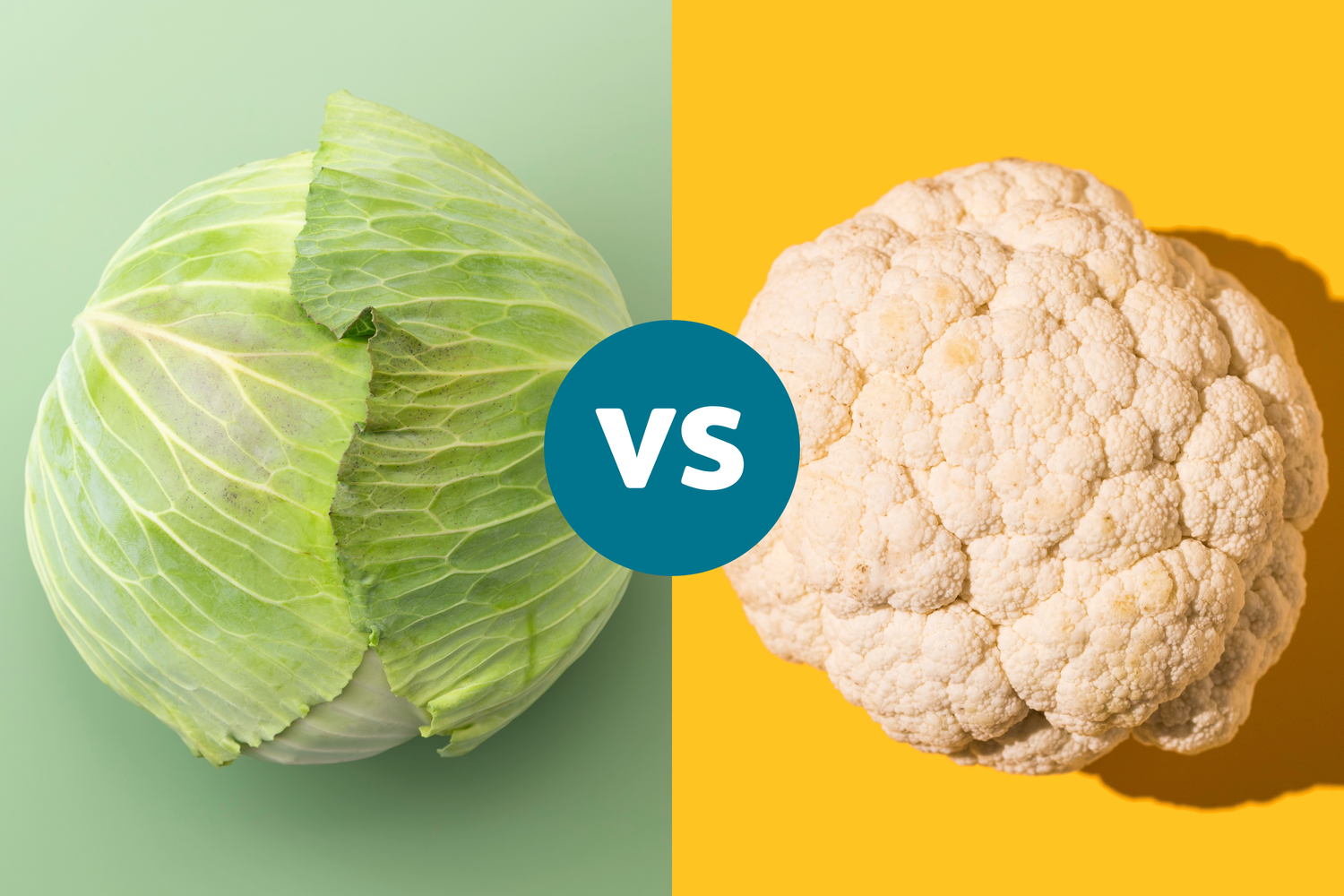
However, total weight isn't the only metric that matters. When we look at cabbage vs cauliflower fiber content per cup, the structural differences become apparent. Cauliflower is more "nutrient-dense" in terms of its fiber-to-calorie ratio. According to nutritional data from the National Institutes of Health, a half-cup serving of cooked cauliflower provides 1.0 gram of total dietary fiber, which is composed of 0.4 grams of soluble fiber and 0.6 grams of insoluble fiber. This balance is crucial for cabbage or cauliflower for gut health because soluble fiber slows digestion to improve nutrient absorption, while insoluble fiber adds bulk to the stool.
| Feature | Cabbage (Raw, 100g) | Cauliflower (Raw, 100g) |
|---|---|---|
| Dietary Fiber | 2.5g | 2.0g |
| Total Calories | 25 | 25 |
| Vitamin C | 54% DV | 51% DV |
| Vitamin K | 85% DV | 13% DV |
| Folate | 11% DV | 14% DV |
Nutrient Breakdown: Cauliflower vs Cabbage Nutrition
Beyond the roughage, the cauliflower vs cabbage nutrition profile reveals why I often recommend a rotation of both rather than choosing just one. Cabbage is a literal vitamin factory. A single-cup serving of raw shredded cabbage contains approximately 2.2 grams of dietary fiber, contributing about 8% to 9% to the recommended daily value for fiber intake. But it's the Vitamin K content that stands out, reaching 85% DV, which is essential for bone health and proper blood clotting.
When we examine red cabbage vs cauliflower nutrition for gut health, the red variety introduces anthocyanins into the mix. These are powerful antioxidants that give the leaves their purple hue. For a gut editor, anthocyanins are exciting because they act as prebiotics, selectively feeding beneficial bacteria like Bifidobacterium while inhibiting potential pathogens. Cauliflower, while lower in Vitamin K, offers a more diverse mineral profile, including higher amounts of potassium and magnesium, which support the muscular contractions of the digestive tract (peristalsis).
Both vegetables are rich in glucosinolates. These sulfur-containing compounds break down during digestion into metabolites like sulforaphane. These molecules are the "clean-up crew" for your gut lining, helping to reduce chronic inflammation and protecting the intestinal barrier. If you are struggling with a "leaky gut" or general systemic inflammation, the sulforaphane found in both is a non-negotiable part of a therapeutic diet.
Managing Bloating: Cooking for Sensitive Digestion
The most common complaint I hear about cruciferous vegetables is the gas. This occurs because both contain a complex sugar called raffinose, which humans lack the enzyme to break down. Instead, the bacteria in your large intestine ferment it, producing gas as a byproduct. Understanding how to cook cabbage and cauliflower to reduce bloating can make these nutritional powerhouses accessible even to those with IBS or a sensitive stomach.
If you are navigating cabbage vs cauliflower for sensitive digestion and gas, preparation is everything. Raw cauliflower is notoriously difficult for the small intestine to process due to its dense cellular structure. Steaming or "steam blanching" is my preferred method. By steaming cauliflower or cabbage for just 3 to 5 minutes, you soften the tough cellulose fibers and begin the breakdown of raffinose without leaching out the water-soluble vitamins like Vitamin C and B6.
Pro-Tip: The Steam-Blanch Technique To maximize digestibility, cut your cauliflower into small florets or shred your cabbage thinly. Steam for 4 minutes until vibrant but still slightly crisp. This method preserves 30% more antioxidants than boiling and significantly reduces the "sulfur" smell often associated with overcooked greens.
For those on a low FODMAP diet, cauliflower is generally considered high-FODMAP in servings larger than 75g due to its mannitol content (a sugar alcohol). In this specific comparison, common green cabbage is often better tolerated in moderate portions, as it is lower in these fermentable carbohydrates.
Beyond Raw: Fermentation and Zero-Waste Tips
If you want to move from "healthy" to "microbiome-optimized," we need to discuss fermented cabbage vs cauliflower for probiotic benefits. While cauliflower can be pickled, cabbage is the gold standard for wild fermentation. Sauerkraut and kimchi are created through lacto-fermentation, a process where natural bacteria convert the sugars in cabbage into lactic acid. This doesn't just preserve the vegetable; it creates billions of CFU (colony forming units) of probiotics that can actively colonize the gut.
Furthermore, we are seeing a major shift toward zero-waste eating in 2026. Most people toss the cauliflower stem and the core of the cabbage, but these are actually the most fiber-dense parts of the plant. The stems contain a higher concentration of lignans—insoluble fibers that provide the "broom" effect for your colon. When calculating how much cabbage or cauliflower to meet daily fiber goals, including these often-discarded parts can help you reach the 25–30g daily target much faster.
The fermentation process also increases the bioavailability of nutrients. For example, the Vitamin C in sauerkraut is often more "accessible" to your body than the Vitamin C in raw cabbage because the bacterial enzymes have already begun the work of breaking down the plant's cellular walls.
Safety Considerations: Vitamin K and Interactions
While cabbage vs cauliflower are generally safe for everyone, there is one medical caveat to keep in mind. Because cabbage is exceptionally high in Vitamin K—providing 85% DV—it can interfere with blood-thinning medications like Warfarin. Vitamin K helps the blood clot, which is the opposite of what these medications are trying to achieve. If you are on such a prescription, consistency is key; don't suddenly triple your cabbage intake without speaking to your physician.
Cauliflower does not carry the same level of risk, providing only about 13% to 14% DV of Vitamin K. Beyond medication interactions, both vegetables contain goitrogens, which can interfere with iodine uptake in the thyroid if consumed in massive quantities in their raw state. However, for 99% of people eating a balanced diet, the benefits of the fiber and antioxidants far outweigh these niche concerns.
FAQ
Which vegetable is easier to digest, cabbage or cauliflower?
Cooked cabbage is generally easier to digest for most people because its fiber structure softens more readily than the dense florets of cauliflower. Additionally, cauliflower contains mannitol, a sugar alcohol that can cause bloating in individuals with sensitive guts or IBS, whereas green cabbage is lower in these specific fermentable sugars.
Does cauliflower or cabbage have more vitamin C?
Cabbage slightly edges out cauliflower in this category. Cabbage provides approximately 54% DV of Vitamin C per serving, while cauliflower provides about 51% DV. Both are excellent sources, but cabbage’s higher density makes it a superior choice for immune support and collagen synthesis.
Is cabbage healthier than cauliflower?
Neither is objectively "healthier," as they serve different nutritional needs. Cabbage is superior for Vitamin K, Vitamin C, and probiotic potential through fermentation. Cauliflower is the winner for mineral diversity and fiber density relative to its calorie count. For the best gut health results, a diet that includes both is recommended.
Which is better for a keto diet, cabbage or cauliflower?
Cauliflower is the preferred choice for a keto diet because of its incredible versatility as a low-carb substitute for rice, flour, and potatoes. While cabbage is also low in calories (22 per cup), cauliflower’s texture allows it to replace high-carb staples more effectively while maintaining a low glycemic load.
Can you substitute cauliflower for cabbage in recipes?
It depends on the dish. In stir-frys or soups, they can often be swapped, though the texture will change significantly. However, you cannot easily substitute cauliflower for cabbage in recipes that require structural flexibility, such as cabbage rolls, nor can you easily replicate the specific crunch of a cabbage-based coleslaw using cauliflower.